
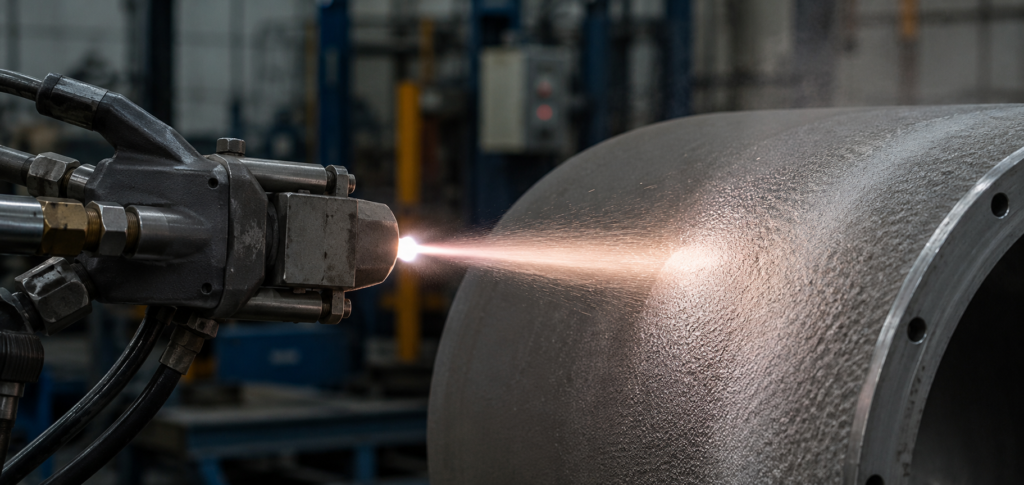

Completed work- metal spraying of a decorative sculpture
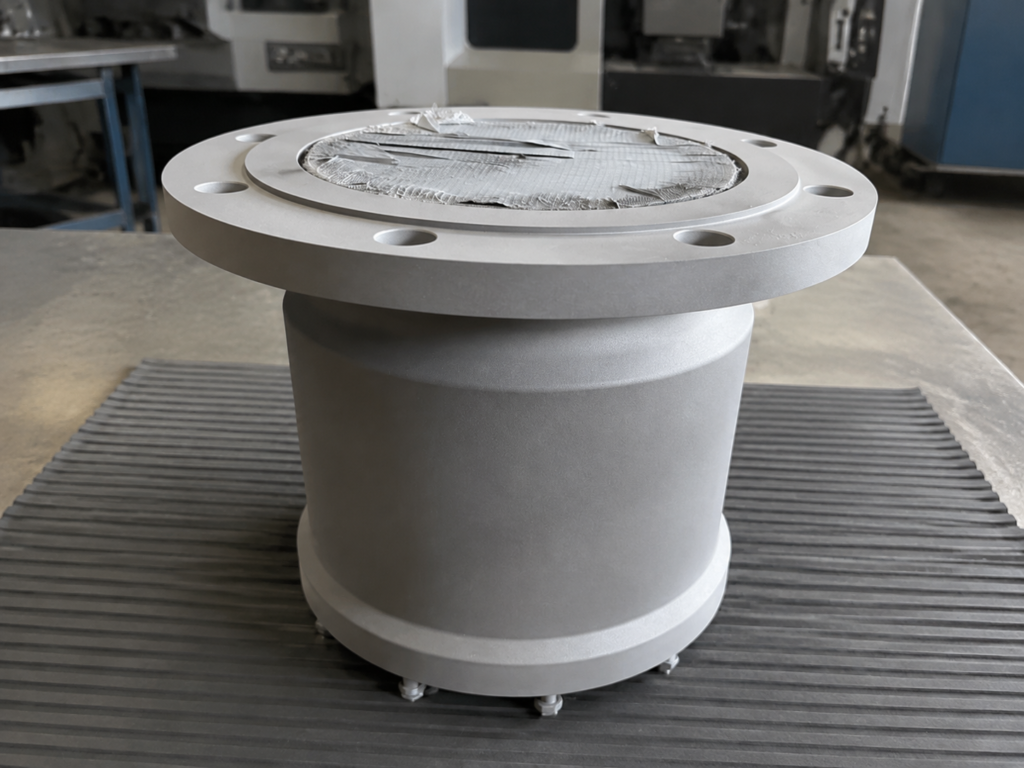
Completed work- glass bead blasting of an industrial component
— Metal spraying
Metal spraying provides long-term corrosion protection for steel structures and components. We use the twin-wire arc spray process, in which metal wires are melted by an electric arc and atomised with compressed air onto a previously cleaned surface. This forms a strong, well- adhered and even metal coating.
We use zinc, aluminium, zinc-aluminium alloys, copper, bronze, tin and other materials suitable for arc spraying, depending on the project requirements.
If required, we can apply metal coatings with a thickness exceeding 1000 µm.
When planning and carrying out metal spraying work, we follow the project's technical requirements EN ISO 2063, which covers the corrosion protection of steel using thermally sprayed zinc, aluminium and their alloys.
The thickness of the finished metal coating is checked using measuring equipment and, depending on the project requirements, we provide a coating thickness measurement report. Certificates for the spray materials used can also be provided upon request.
Depending on the project, we also work in accordance with EN ISO 14713, EN ISO 12944 and EN ISO 9223.
— Sandblasting and shot blasting
Sandblasting removes rust, old paint, scale and other contaminants from metal surfaces that may interfere with coating adhesion. Abrasive media is propelled at high velocity using compressed air, creating a clean surface with a suitable profile for painting, metal spraying or the application of other protective coatings.
Shot blasting is an effective method for cleaning steel components and metal structures and preparing them for subsequent surface treatment. It removes rust, paint, scale and other surface contaminants.
If required, we also carry out sandblasting at the customer's site.
— Glass bead basting
Glass bead blasting is suitable for gentle surface cleaning and for achieving a uniform matte finish. Fine glass beads are used in the process to clean the surface without causing excessive damage.
Glass bead blasting is particularly suitable for:
- stainless steel components and structures;
- aluminium components and castings;
- machine and equipment and components;
- engine, automotive and motorcycle parts;
- housings, covers and fastening components;
- cleaning weld seams and heat discolouration;
- decorative metal components;
- components being restored where a uniform matte finish is required.
The result is a clean, uniform and visually refined surface.
Send us your project description or drawings.
To prepare a quotation, please include the material, quantity and required coating specifications where possible.